
Figuring out where to donate a bicycle for tax credit in 98467 can feel a bit tricky at first. Many people want to help others and save money on their taxes. But knowing the right places to donate your old bike can be confusing.
This guide makes it super simple. We will walk you through exactly how to do it, step by step. Get ready to learn how to make a difference and get a tax benefit with your bike.
Finding A Bike Donation Spot For Tax Benefits
Donating a bicycle is a great way to help out your community. It also gives you a chance to get a tax credit. Many people wonder where to donate a bicycle for tax credit in 98467.
They want to make sure their donation helps someone in need and that they get the tax benefit they deserve. This guide will show you how to find these spots easily.
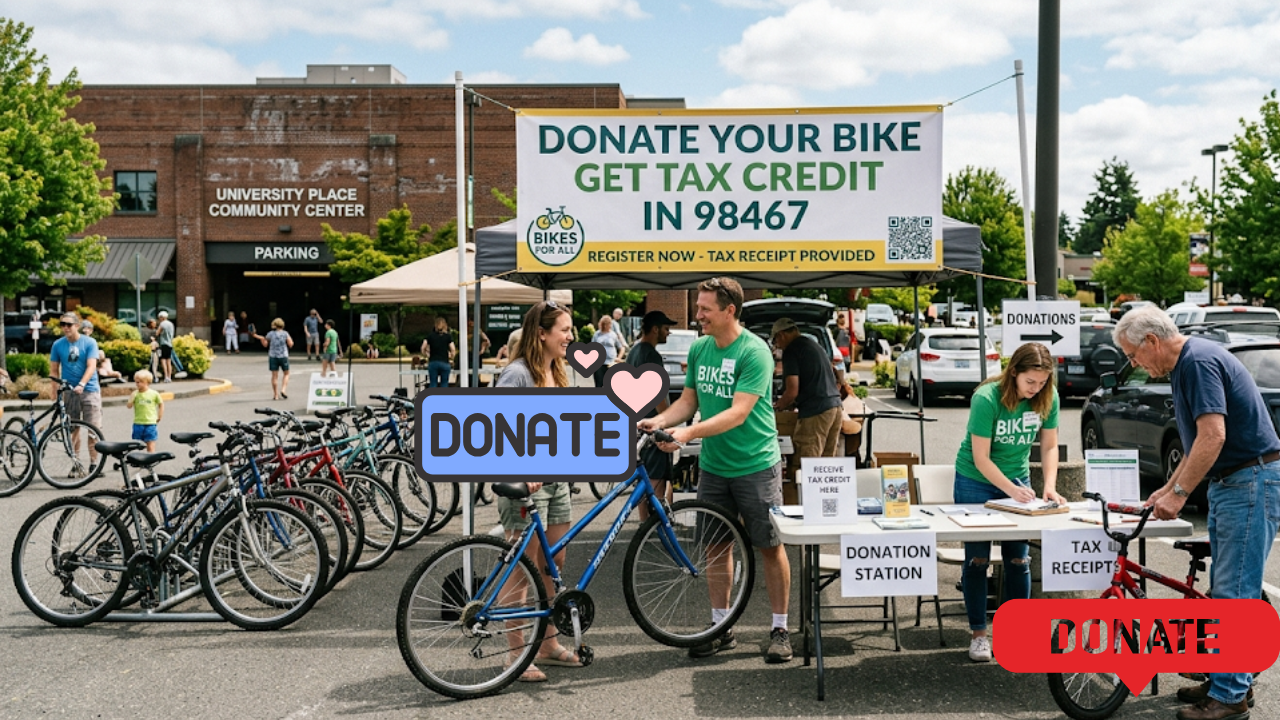
Why Donate A Bicycle For Tax Credit
Giving away an old bicycle can do so much good. Families who need transportation can get a reliable bike. Kids can have a fun way to get around.
Charities that fix up and give away bikes do amazing work. When you donate a bike, you are part of this positive cycle.
Beyond helping others, there’s a financial perk. The U.S. tax code allows you to deduct the value of donated goods.
This means you might get a tax credit for your bike. It’s a win-win. You help someone, and you save on taxes.
This is why asking “where to donate a bicycle for tax credit in 98467” is a smart question to ask.
Understanding Tax Deductions For Donations
In the United States, you can often deduct the value of charitable donations from your taxable income. This is done through itemized deductions. To do this, you usually need to file IRS Form 1040, Schedule A.
You must also get a written acknowledgment from the charity. This acknowledgment should state that you did not receive any goods or services in return for your donation, or it should describe any goods or services provided.
The amount you can deduct depends on a few things. For items like bicycles, the deduction is usually based on the fair market value (FMV) of the item. Fair market value is what a willing buyer would pay a willing seller for the item, neither being forced to buy or sell, and both having reasonable knowledge of relevant facts.
For used items, this is typically what they would sell for in a secondhand store.
If your bicycle is in good condition, its FMV might be higher. Charities that repair and resell bikes often provide appraisals or can help you estimate the value. Keep records of your donation.
This includes the date, the name of the charity, and a description of the bike.
Organizations That Accept Bicycle Donations For Tax Credit
Many organizations are happy to accept bicycle donations. Some focus specifically on providing bikes to those in need. Others sell donated bikes to fund their general charitable work.
For anyone wondering where to donate a bicycle for tax credit in 98467, looking for these types of groups is key.
Local Nonprofits Focused on Bikes
There are often local bike shops or community groups that run bike repair and redistribution programs. These groups are usually fantastic places to donate. They know bikes, they know how to get them to people who need them, and they understand the requirements for tax deductions.
These organizations might collect used bikes, fix them up, and then give them to low-income families, students, or refugees. Sometimes they sell them at a very low cost. Because their mission is directly related to providing a service or good to the community, they are typically registered charities.
Always check if they are a 501(c)(3) nonprofit organization. You can usually find this information on their website or by asking them directly.
General Charitable Organizations
Larger, well-known charities also accept bicycle donations. These might include groups like Goodwill, Salvation Army, or Habitat for Humanity ReStores. While they might not specialize in bikes, they often have a system for handling donated goods and can provide the necessary documentation for tax deductions.
When donating to a larger organization, they might sell your bike at an auction or in their thrift store. The money earned then supports their broader mission, which could be anything from helping the homeless to building houses. These organizations are almost always registered 501(c)(3) nonprofits, making your donation tax-deductible.
How To Find Specific Locations In 98467
To find out where to donate a bicycle for tax credit in 98467, you can start with online searches. Use terms like “bicycle donation 98467,” “donate bike tax credit Tacoma” (since 98467 is in the Tacoma area), or “charity bike repair Washington.”
Look for organizations that explicitly mention accepting bicycle donations. Check their websites for donation guidelines and tax receipt information. Many will have a dedicated “Donate” or “Support Us” section.
You can also call local bike shops in the 98467 area or nearby. Even if they don’t accept donations directly, they might know of local charities that do. They are often connected to the cycling community and its charitable efforts.
Steps For Donating Your Bicycle For A Tax Credit
Ready to donate your bike and get that tax credit? Follow these easy steps.
Step 1 Evaluate Your Bicycle
First, look at your bike. Is it in rideable condition? Does it have flat tires, rusted chains, or missing parts?
Charities often prefer bikes that are in good enough shape to be repaired with minimal effort, or that can be used as-is. If your bike is beyond repair, some places might still take it for parts.
If your bike is in good condition, you can estimate its fair market value. You can look up similar bikes on sites like Craigslist or eBay to get an idea.
Step 2 Find A Qualified Charity
This is the most important step for your tax credit. You need to donate to a qualified charitable organization. In the U.S., this generally means a 501(c)(3) nonprofit organization.
Use online search engines to find organizations in or near 98467. Look for keywords like “bicycle donation,” “charity,” and “tax receipt.” Check the organization’s website. It should state that they are a 501(c)(3) or provide their Employer Identification Number (EIN), which you can use to verify their status with the IRS.
If you’re unsure, ask the organization directly if they are a 501(c)(3) and if they can provide a donation receipt for tax purposes.
Step 3 Prepare Your Bicycle For Donation
Make sure the bike is clean. Remove any personal items. If you have a bike lock, helmet, or other accessories, you can often donate those too.
Check with the charity if they accept these extras.
Step 4 Complete The Donation
You’ll need to get your bike to the charity. Some organizations offer pickup services, especially for larger items like bikes. Others will require you to drop off the bike at their location.
When you drop off or when they pick up the bike, make sure you get a written acknowledgment. This document is crucial for claiming your tax deduction.
Step 5 Get Your Donation Receipt
The written acknowledgment should include:
- The name of the organization.
- The date of the donation.
- A clear description of the donated item (e.g., “one used men’s bicycle”).
- The value of the donation (if the charity determines it). For items valued over $500, the charity must provide a written appraisal if you request it. However, for most used bikes, this is not necessary unless you are claiming a very high value.
- A statement that no goods or services were provided in return for the donation.
Keep this receipt with your tax records. If your total charitable donations for the year exceed certain limits, you may need to file Schedule A with your tax return.
Valuing Your Donated Bicycle For Tax Purposes
Determining the value of your donated bicycle is important for claiming the tax credit. The IRS allows you to deduct the fair market value (FMV) of the item.
What Is Fair Market Value?
FMV is what someone would typically pay for the item in its current condition from a willing seller who is not being forced to sell. For a used bicycle, this means what it would sell for at a pawn shop, consignment store, or a private sale.
How To Estimate FMV
- Research Online: Check websites like Craigslist, eBay, or Facebook Marketplace for similar used bikes. Look at bikes from the same brand, age, and condition.
- Consult Bike Shops: Local bike shops might offer appraisals or give you an estimate of what a used bike in good condition would sell for.
- Consider Condition: A bike with new tires, good brakes, and a clean drivetrain will have a higher FMV than one with rust and worn parts.
When The Charity Determines Value
Some charities, especially those that repair and resell bikes, might have their own system for valuing donated items. If the charity provides a written acknowledgment that includes a value, this can be used for your deduction. However, if you believe the value they’ve assigned is too low and you can prove a higher FMV, you can claim the higher amount.
For bicycles valued at more than $500, the charity may need to provide a qualified appraisal. Most donated bikes will likely fall below this value, making the process simpler. Always check the IRS guidelines for the most current rules on substantiating charitable contributions.
Tax Rules For Donating Property
Donating property like a bicycle is different from donating cash. The IRS has specific rules.
Donating Property Worth More Than $500
If your bicycle is valued at more than $500, you’ll need to get a qualified appraisal from a recognized third party. The charity must also provide you with a written description of the property and how they intend to use or dispose of it. This is a less common scenario for most used bicycle donations but is important to know.
Donating Property Worth Less Than $500
For most bicycle donations valued under $500, the process is simpler. You need a written acknowledgment from the charity. This receipt should describe the bike and confirm that you received nothing in return.
When The Charity Sells Your Donated Item
If you donate a bicycle to a charity and they sell it, your deduction is generally limited to the amount the charity received from the sale. For example, if you donate a bike you think is worth $200, but the charity sells it for $50, your deduction is $50.
However, if the charity significantly improves the item before selling it, or uses it substantially in their charitable activities, you may be able to deduct the FMV. This is why it is important to donate to organizations that use the bikes directly or have clear processes for selling them to fund their mission.
Common Mistakes To Avoid
When you are looking where to donate a bicycle for tax credit in 98467, it’s easy to make small mistakes that can impact your tax deduction.
- Not getting a receipt: This is the biggest mistake. Without written proof of donation, you cannot claim a tax credit.
- Donating to non-qualified organizations: Only donations to 501(c)(3) organizations are deductible.
- Overestimating the value: Be realistic about your bike’s fair market value.
- Not keeping records: Keep copies of receipts and any other documentation.
Frequently Asked Questions
Question: Can I donate any bicycle?
Answer: Most charities prefer working bicycles or those that can be easily repaired. Extremely damaged or obsolete bikes may not be accepted. It’s always best to call ahead and ask.
Question: How do I find out if a charity is a 501(c)(3)?
Answer: You can search the IRS Tax Exempt Organization Search tool on their website. Many charities also list their 501(c)(3) status on their own websites.
Question: What if I donate a bike that needs a lot of repairs?
Answer: If the charity is equipped to repair it and intends to do so for redistribution or sale, it is likely still a deductible donation. The value you can claim might be adjusted based on the cost of repairs needed.
Question: Do I have to itemize deductions to claim a bike donation?
Answer: Yes, you generally must itemize deductions on Schedule A of Form 1040 to claim the value of donated property. If you take the standard deduction, you won’t benefit from itemizing charitable contributions.
Question: How much can I deduct for a used bicycle?
Answer: You can deduct the fair market value of the bicycle at the time of donation. This is what a willing buyer would pay a willing seller, neither being forced to buy or sell, and both having reasonable knowledge of relevant facts.
Final Thoughts
Finding where to donate a bicycle for tax credit in 98467 is simpler than you might think. By selecting a qualified 501(c)(3) charity and obtaining proper documentation, you can successfully help your community and benefit from tax savings. Always confirm the charity’s status and get a detailed receipt for your records.
Your donation makes a real impact.