If you’ve come across the classic physics problem — “a 100 kg bicycle and rider move up a hill or incline, find the force, work, or power required” — you’re dealing with one of the most common applications of work-energy principles in introductory mechanics. This guide breaks down every formula you need, explains the physics behind it, and walks through fully worked examples.
The Setup: What “100 kg Bicycle and Rider” Means
In these problems, the “100 kg” figure refers to the combined mass of the bicycle and the person riding it. Treating them as a single system simplifies the physics — you don’t need to separately track the bike’s mass and the rider’s mass, since they move together with the same velocity and acceleration.
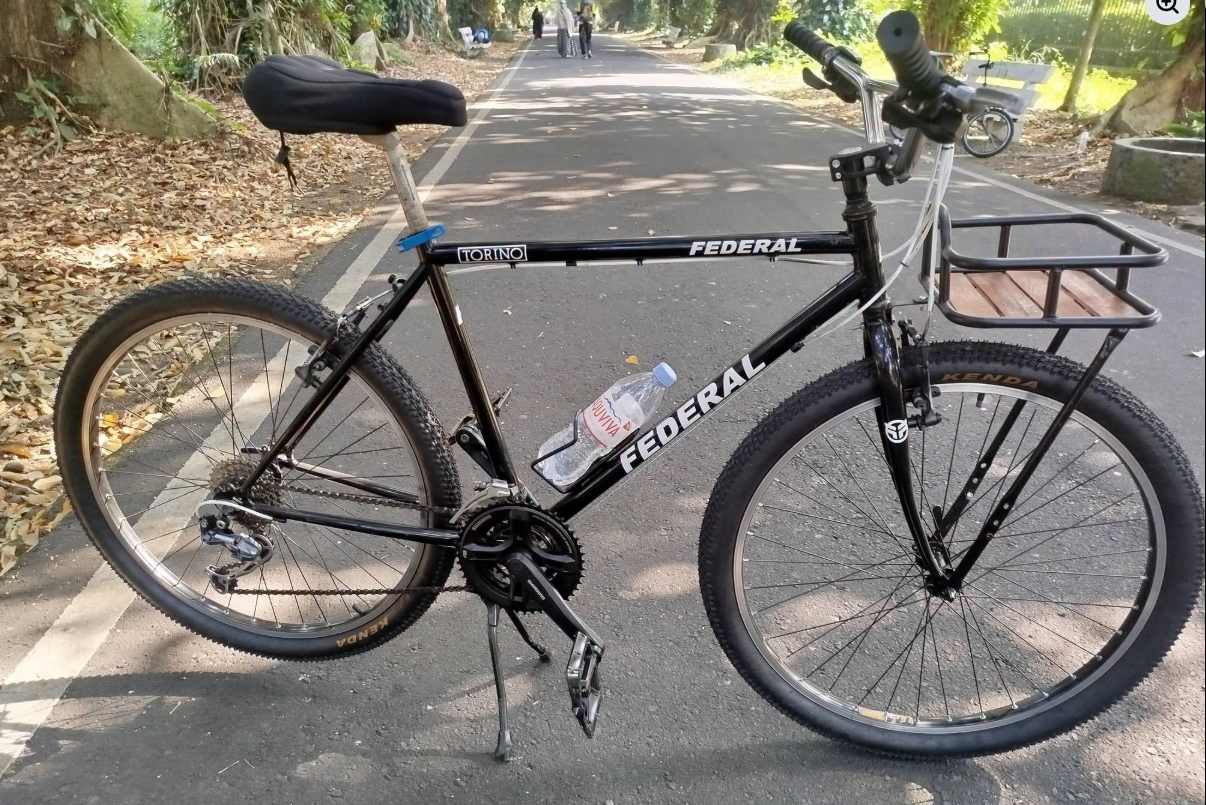
This combined-mass approach is what allows the four core formulas below to apply directly.
Core Formula #1: Gravitational Potential Energy Gained
When a bicycle and rider move up an incline or hill, the primary quantity of interest is usually the change in gravitational potential energy (ΔPE):
ΔPE = m × g × hWhere:
- m = combined mass (100 kg)
- g = acceleration due to gravity (9.8 m/s², or 9.81 m/s² for more precision)
- h = vertical height gained (in meters)
Example: If the bicycle and rider climb a vertical height of 20 m:
ΔPE = 100 kg × 9.8 m/s² × 20 m = 19,600 J (19.6 kJ)This is the minimum energy the rider must supply against gravity alone, ignoring friction and air resistance.
Core Formula #2: Force Required on an Incline
If the incline has an angle θ to the horizontal, the force component acting against the rider’s motion (the component of gravity along the slope) is:
F = m × g × sin(θ)Example: For a 100 kg bicycle and rider on a 5° incline:
F = 100 × 9.8 × sin(5°) = 100 × 9.8 × 0.0872 ≈ 85.4 NThis is the extra force the rider must generate just to counteract gravity while climbing — separate from any force needed to overcome rolling resistance or air drag.
Core Formula #3: Work Done Moving Up the Incline
Work done against gravity while traveling a distance d along the incline is:
W = F × d = m × g × sin(θ) × dNote that this is mathematically equivalent to m × g × h, since h = d × sin(θ). Both formulas describe the same physical quantity — the work done against gravity — just expressed differently depending on whether you know the vertical height or the distance along the slope.
Core Formula #4: Power Output
Power tells you the rate at which work is done — this is often the most practical figure for cyclists, since it relates directly to physical effort:
P = W / tOr, in terms of force and velocity:
P = F × vWhere:
- W = work done (J)
- t = time taken (s)
- v = velocity along the incline (m/s)
Example: If the 100 kg bicycle and rider climb the 20 m height in 40 seconds:
P = 19,600 J / 40 s = 490 WFor context, 490 W is a very high sustained power output — competitive cyclists produce roughly 250–400 W during hard climbs, so this example represents a brief, intense effort rather than a sustainable pace.
Putting It All Together: A Full Worked Example
Problem: A 100 kg bicycle and rider move up a 10° incline at a constant speed of 4 m/s. Find the force required to overcome gravity and the power output needed.
Step 1 — Find the force component along the incline:
F = m × g × sin(θ) = 100 × 9.8 × sin(10°) = 100 × 9.8 × 0.1736 ≈ 170.1 NStep 2 — Find the power required:
P = F × v = 170.1 N × 4 m/s ≈ 680.4 WThis tells us the rider must sustain roughly 680 W just to counteract gravity at that speed and incline — before accounting for friction or wind resistance, which would push the real-world number higher.
Why Real-World Numbers Are Higher
The formulas above isolate gravity’s effect, which is what most textbook problems ask for. In real cycling, riders also work against:
- Rolling resistance (tires against the road)
- Air resistance (which grows with the square of speed)
- Drivetrain losses (energy lost in the chain and gears)
A complete real-world power model adds these terms:
P_total = P_gravity + P_rolling + P_air + P_drivetrain_lossThis is why professional cycling power meters often show 300–400 W for a climb that a simplified formula might calculate as needing only 150–200 W against gravity alone.
Quick Reference Table
| Quantity | Formula | Common Units |
|---|---|---|
| Potential energy gained | ΔPE = mgh | Joules (J) |
| Force along incline | F = mg sin(θ) | Newtons (N) |
| Work done | W = mgh = Fd | Joules (J) |
| Power output | P = W/t = Fv | Watts (W) |
Frequently Asked Questions
Do I need to know the incline angle to solve these problems? Not always. If you’re given the vertical height directly, use ΔPE = mgh. If you’re given the incline angle and distance traveled along the slope, use F = mg sin(θ) and W = Fd.
What value of g should I use? Use 9.8 m/s² for most textbook problems, or 9.81 m/s² if more precision is required. Some problems round to 10 m/s² for simplicity — check your problem’s instructions.
Does the mass of the bicycle matter separately from the rider? No — since the bicycle and rider move together at the same velocity and acceleration, they’re treated as one combined mass in every formula above.
Why does the answer not account for friction? Most introductory physics problems isolate gravitational effects to teach the underlying concept. Friction and air resistance are typically introduced in more advanced problems or noted separately as “ignore friction/air resistance” or “assume frictionless” in the problem statement.